
Share:
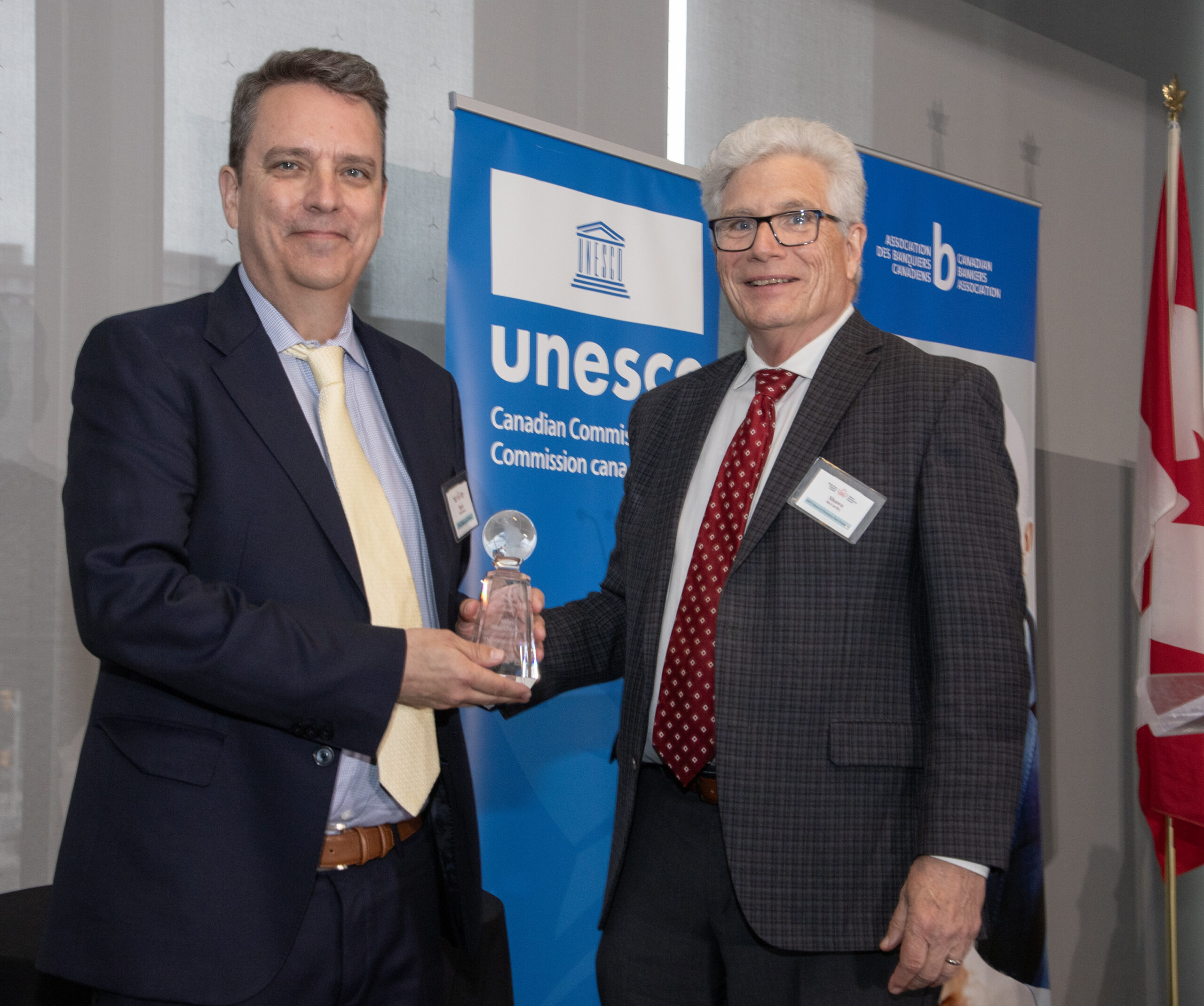
For more than two decades, Mark MacKinnon has served as a foreign correspondent for The Globe and Mail, covering conflict in Afghanistan, the Middle East and Ukraine, often at great personal risk. He has said he does this work because he believes Canadians should see and understand the world through the eyes of Canadian journalists, whose perspective on global issues — from development and environmental crises to war — is distinct and essential. At times, his work has transcended journalism. In 2021, for example, he helped translators escape Afghanistan when Kabul fell to the Taliban.
MacKinnon fielded our questions on WhatsApp, replying by audio recording.
2025 was another deadly year for journalists in conflict zones. Does the press benefit from special status in conflicts, as per the United Nations resolutions that state journalists are not to be targeted and, in fact, are to be protected?
There was a time when that was real, back close to when I started my career, working in places like Afghanistan or Iraq — even Chechnya.
Putting on that press vest gave you a form of protection, mostly because the bad guys — to use an unfair term — used to think, “That person is someone we want to convince of our version of the truth” — or, more likely, “Killing that person is more trouble than it’s worth.”
The first time I took the TV signs off the car was very soon after the Russian invasion of Ukraine, when Russians started firing on journalists. You realized, hey, they’re eliminating the witnesses, and that’s an intentional strategy.
You almost feel like you’re adding an element of danger by identifying yourself as press if you’re approaching many of today’s militaries. Israel has successfully muddied the waters on who was or wasn’t a journalist — or is or isn’t a journalist — in Gaza. We’re seeing that in other conflicts. It’s a worrying trend.
Can reporters maintain a critical journalistic perspective when they are embedded with one side of a conflict or another?
I rarely embed with militaries for anything longer than a drive to the front lines. I’m generally not in favour because it gives them control of what you see. I don’t — but others do — agree to having the work seen by a censor before it goes out.
One of the great concerns I have about all coverage of recent conflicts is that it is often from one side.
Twenty years ago, I was in Lebanon for the 2006 Israel-Hezbollah war for The Globe and Mail. My spouse [Carolynne Wheeler, now at BBC] was covering the same war for us but from northern Israel. … Afterward, this group of journalists, who were friends, would get together and have dinner. It took a long time for those who reported from southern Lebanon and those who were in northern Israel to stop shouting at each other.
Where you’re standing is what you see. What you see is what you feel and what you report.
Are you concerned about the lack of Canadian correspondents in the field?
Our interests are not the same as those of Americans, the British or the French. We need to interpret things through our own lens. I am deeply concerned about the lack of foreign coverage from Canadian mainstream news outlets.
When subjects, countries and continents disappear from coverage, they also disappear from Question Period, they disappear from the scrums. Canada had become a very isolated country until very recently, with the alarm Trump has given us.
What was your most and least favourite posting?
Foreign correspondents who see each other in all the terrible places talk about “first-posting syndrome.” You never quite fall in love with a place like you did the first time you were sent abroad.
When I was posted to Russia, my brain was younger, my enthusiasm for it all was higher, and I was interacting with the culture and the people. It is no longer popular to say you loved living in Russia, but at the time I did.
I also loved living in China. Our daughter was born while we were living in China. Despite the oppressiveness of the regime, and the air pollution, we planned to stay there for as long as we could.
Both postings ended the same way — with the Russian government in 2004 and the Chinese government in 2013 telling me my visa would not be renewed.
I’ve spent a lot of time in the Middle East and have a lot of good friends there. Living in Jerusalem, even then — just the hostility you faced as a foreign journalist was difficult. The accusations that you were somehow motivated by anything other than wanting to do your job were hard for many of us to bear.
How much are you away from home these days? What kind of sacrifice is that for your family?
Since the war in Ukraine started, it’s been almost continuous — month in, month out. Sometimes it’s two weeks in, two weeks out. And just as the Ukraine story was getting into a pattern, Oct. 7 happened and suddenly I was back in Israel. Just when I was starting to think about changing gears, we have this new war with Iran.
When my daughter Alexandra was little, I’d tell her, “I’m going to a place called Afghanistan, and they make really interesting carpets there. I’ll bring you back one.” Now she wakes up and listens to the news — at our house, BBC is on all the time — and she questions me about which cities I’m going to travel to in Ukraine and what flight I’m going to take from the Middle East.
The bubble has burst. She knows what I’m doing — and she’s not a big supporter. When one of her friends told her class she wanted to be a journalist, Alexandra got up and said: “No, you don’t!”
 Dispatch
August 31, 2026
 Dispatch
August 31, 2026
 Dispatch
August 31, 2026
*Indiciates required field


