November 27, 2025
Share:
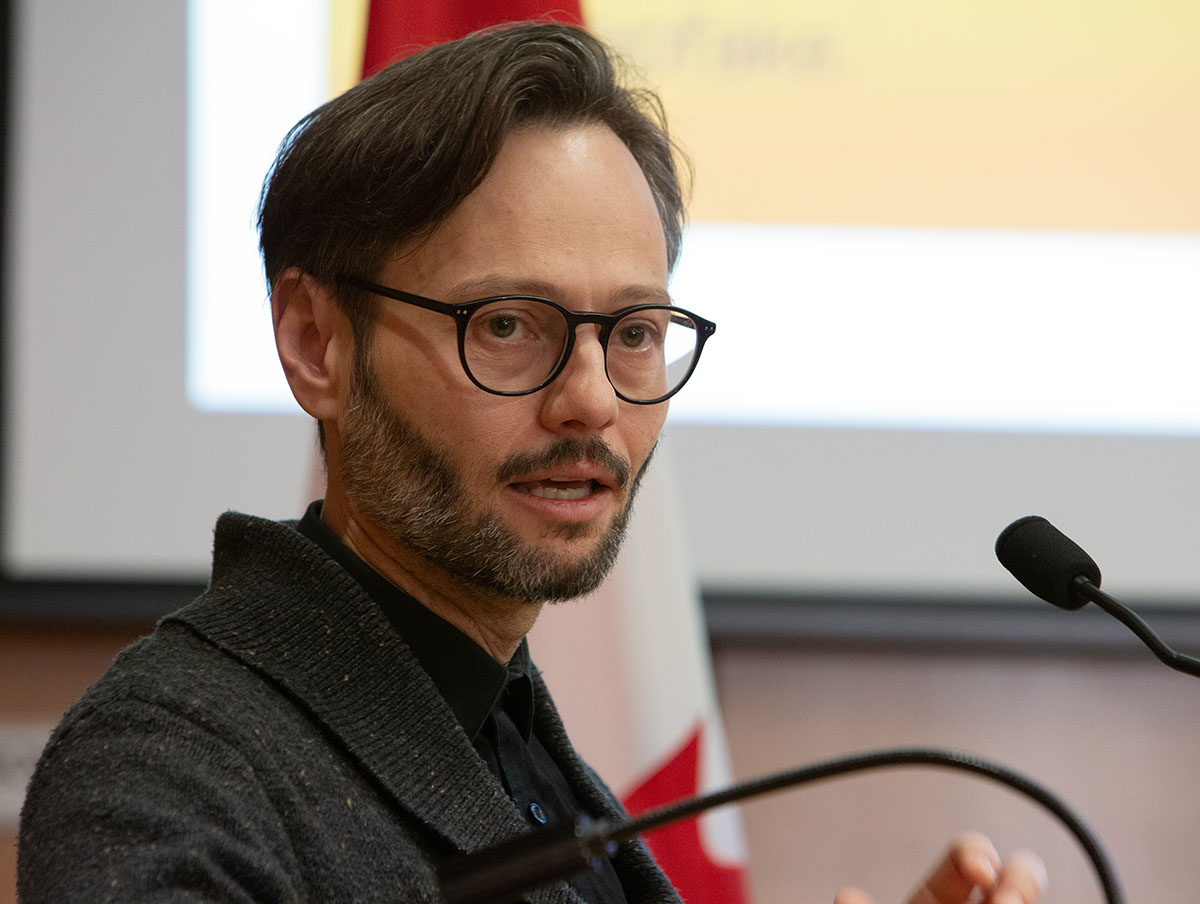
Fact-based, responsible journalism must be seen as a public good that’s supports democracy and requires government policy, Aengus Bridgman, director of the Media Ecosystem Observatory, told WPFC’s AI symposium.
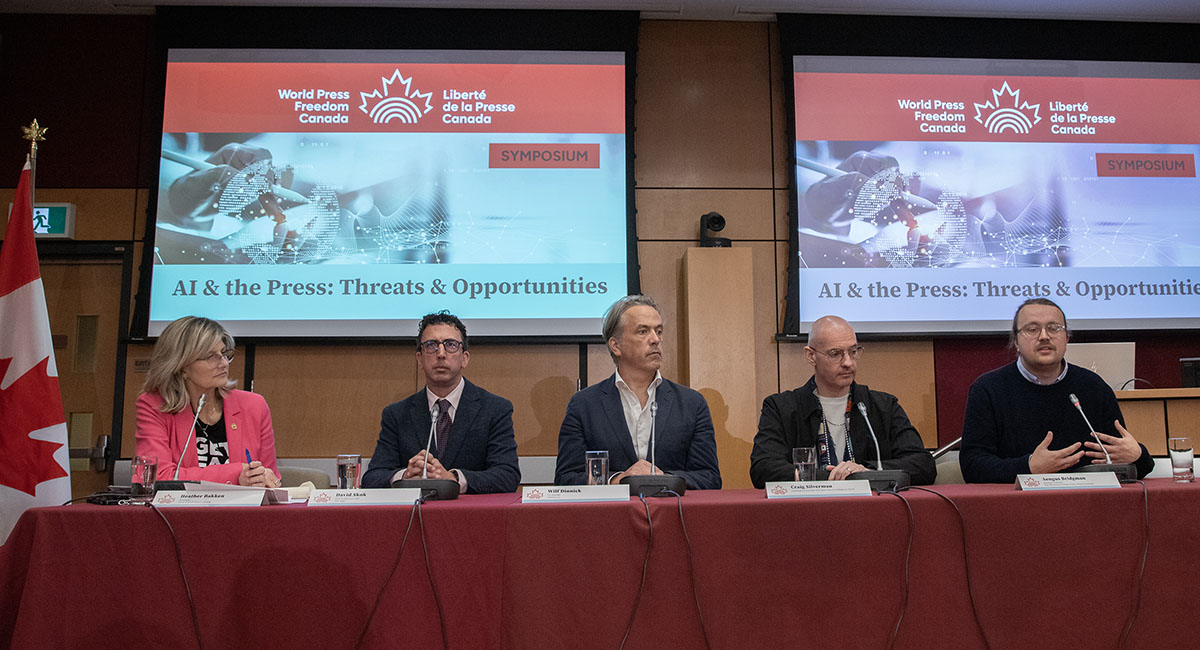
Bridgman participated on a panel on Misinformation, Disinformation and AI: Trust on the Line. He participated with David Skok, publisher of the online news site The Logic, investigative reporter and consultant Craig Silverman, and Wilf Dinnick, co-founder of GetFact.ca, a fact-checking service.
Bridgman said the age of AI is dawning at a time of market failure and declining trust for existing news media.
It is a shared goal in a democratic society to have an informed population, and for politicians, policymakers and other leaders to be held to account, he said. “There is this goal… and we are not achieving that. And we are not in a situation where the information environment is conducive to that.”
In the past decade, there has been a steep drop in the percentage of Canadians who say they have a strong trust in journalism.
At the same time, an increasing number of people rely on a diffuse, primarily socially driven, increasingly AI generated information environment to get their news. And Canadians are worried: some 70 per cent are very concerned about AI spreading “hallucinated content” and that jumps to 80 per cent when you talk about AI being used intuitionally to spread disinformation, Bridgman said.
Canadians “overwhelmingly want [government] action in the space at the same time that they’re consuming and engaging and excited about this technology.”
There are examples in Europe and California, for example, that Canada could emulate to require more transparency from AI developers.
Skok said journalists bear some responsibility for the decline in trust. Too many news stories rely on single-sourced or anonymous sources. The Logic rigorously fact-checks its articles before publishing, he added.
Still, Skok worries AI is eroding the revenue models for publications like news outlets by creating a “zero click environment.”
Companies like Google are taking content from news sources and using it for AI-generated summaries to answer search queries. As a result, publishers no longer benefit from the links that drive traffic to their sites.
Skok urged the Competition Bureau to break up Google’s dominance on AI-based search summaries.
There also needs to be a much greater, societal wide emphasis on digital and AI literacy to give Canadians the tools to recognize false information and fake images, Silverman told the symposium.
He said we now have an adversarial information ecosystem in which various actors are trying to rob you, enrage you, persuade you or confuse you.
We are under “cognitive attack.” And AI increases the scale of those attacks.
“The reality is that we are facing unprecedented amounts of scams, unprecedented amount of foreign interference, unprecedented amounts of paid-for disinformation campaigns and other efforts,” Silverman said. “And at the end of the day, the goal is your brain.”
While panellists agreed on the need for greater citizen awareness, Bridgman said there is a clear role for government, comparing the tech world today to a grocery store in which there was no requirement to list ingredients for the food we purchase.
This is a space where there needs to be concerted collective action he said. “If there ever was a moment, this is the moment.”
*Indiciates required field