Share:
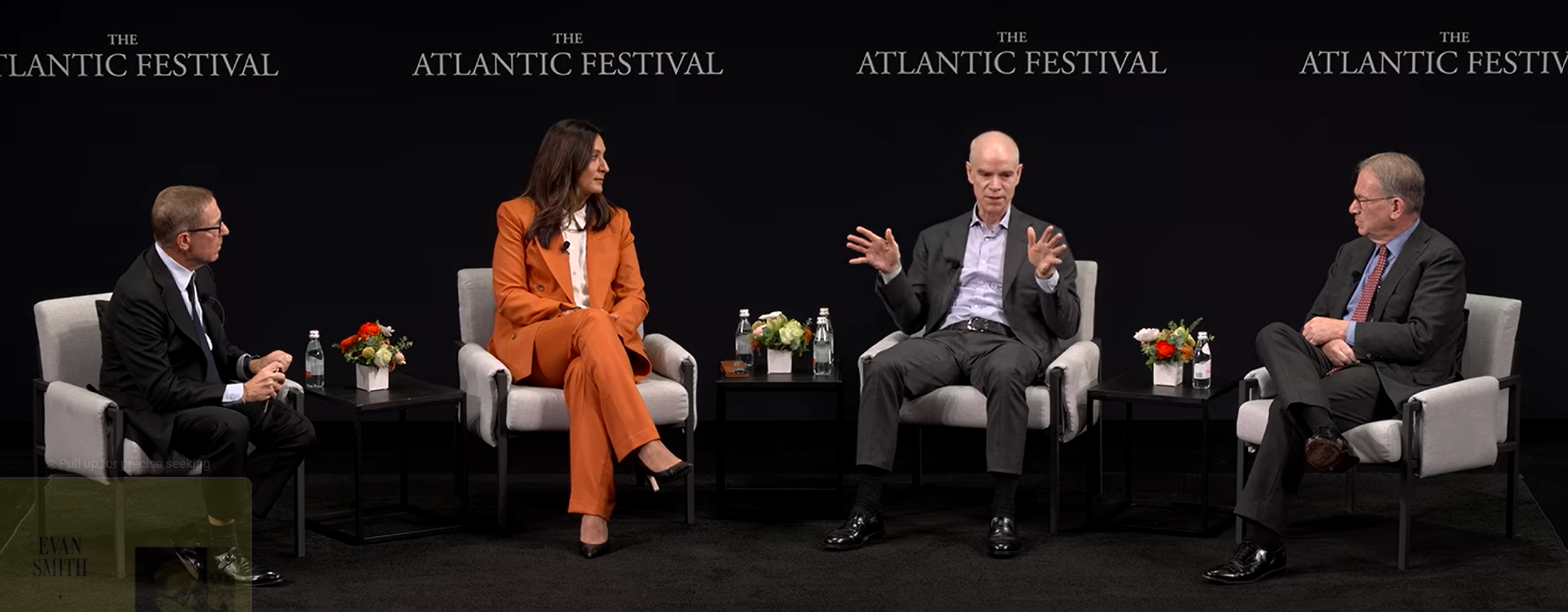
Just what was said: The Atlantic Festival recently gathered three newsroom leaders to discuss the job of journalism today. The conversation, which you can watch here, began with a discussion about the power of just showing up.
Jeffrey Goldberg, editor in chief of The Atlantic:
You wake up every morning with even more of a sense of mission than maybe you would in ordinary times. I am not saying that we are politicized. I always tell our staff this, and I’m borrowing from Marty Baron, the former editor of The Washington Post: We’re not going to war. We’re not part of the resistance. We’re just going to work.
And as long as you just remember that your job every day is to find out something that’s true, contextualize it, treat it fairly, and write it accurately, that’s great. You finished the day by putting something out there. You hope that people are taking to it. You hope that it elevates the ideology of truth. But that’s what you do.
It’s sad that these concepts are under pressure. I can only speak for myself, but it’s great to wake up with that purpose.
Amna Nawaz, co-anchor and co-managing editor of PBS NewsHour:
Information is power. That is a basic fact. And in a democracy, an informed electorate is what powers our democracy. That’s also a basic fact. … I look at it as the advice I got from my very first boss in journalism. He told me that to be a good journalist is a lot like just being a good person in life: Most of it is showing up. You have to show up. And that means showing up on the ground. It means going to cover the stories that not everybody is covering. It means reporting from the front lines. It also means showing up when you’re able to have access to someone in a position of power to hold them accountable.
The way I think about my job every single day is: I’m not asking questions that I necessarily want the answers to. I’m asking questions on behalf of everyone out there who can’t be in that room, who can’t put questions to that person in power.
The threats that we’re up against now, they’re not like anything we faced in recent times. I compare it to some of the stuff that I’ve seen covering other countries, other autocratic, anti-democratic leaders in other nations. The same hallmarks are happening here now. It’s a worrying time for journalists, but the best we can do every day is show up and, as I like to say, just put something good out into the world every day.
Joe Kahn, executive editor of The New York Times:
The task for us is to do, as Jeffrey said, to wake up every day, to do original reporting. Ideally, bring new information to light on all the stories that matter every day, and to get it out there, increasingly in forms that people want to consume that information. And that mission is under stress, but it’s more critical than ever.
Ce qui a été dit : Le festival de The Atlantic a récemment réuni trois dirigeants de salles de rédaction pour discuter du métier de journaliste aujourd’hui. La conversation, que vous pouvez visionner ici, a commencé par une discussion sur l’importance fondamentale d’être présent sur le terrain.
Jeffrey Goldberg, rédacteur en chef de The Atlantic :
Chaque matin, on se réveille avec un sentiment de mission encore plus fort qu’en temps normal. Je ne dis pas que nous sommes politisés. Je répète toujours à notre équipe, en reprenant les propos de Marty Baron, ancien rédacteur en chef du Washington Post : nous ne partons pas en guerre. Nous ne faisons pas partie de la résistance. Nous allons simplement travailler.
Et tant qu’on se rappelle que notre travail, chaque jour, consiste à découvrir quelque chose de vrai, à le mettre en contexte, à le traiter avec équité et à le rapporter avec exactitude, c’est déjà très bien. À la fin de la journée, on a publié quelque chose. On espère que les gens s’y intéresseront. On espère que cela contribuera à faire progresser la primauté de la vérité. Mais voilà en quoi consiste notre travail.
Il est triste de constater que ces principes sont aujourd’hui remis en question. Je ne peux parler que pour moi, mais c’est formidable de se réveiller chaque matin avec cette raison d’être.
Amna Nawaz, coprésentatrice et codirectrice de la rédaction du PBS NewsHour :
L’information, c’est le pouvoir. C’est un fait fondamental. Et dans une démocratie, ce sont des électeurs bien informés qui font fonctionner le système démocratique. C’est aussi un fait fondamental. […] Je repense souvent à un conseil que m’a donné mon tout premier patron en journalisme. Il m’avait dit qu’être un bon journaliste, c’est un peu comme être une bonne personne dans la vie : l’essentiel, c’est d’être présent. Il faut être là. Cela signifie être sur le terrain, aller couvrir des sujets dont les autres ne parlent pas, faire des reportages en première ligne. Cela signifie aussi saisir les occasions de rencontrer des personnes en position de pouvoir pour leur demander des comptes.
Voici comment j’envisage mon travail au quotidien : je ne pose pas nécessairement des questions auxquelles je souhaite personnellement obtenir des réponses. Je pose des questions au nom de toutes les personnes qui ne peuvent pas être dans cette salle, qui n’ont pas la possibilité d’interroger les détenteurs du pouvoir.
Les menaces auxquelles nous faisons face aujourd’hui ne ressemblent à rien de ce que nous avons connu récemment. Elles me rappellent certaines situations que j’ai observées en couvrant l’actualité dans d’autres pays, sous des dirigeants autocratiques et antidémocratiques. Nous voyons maintenant apparaître ici les mêmes caractéristiques. C’est une période inquiétante pour les journalistes, mais la meilleure chose que nous puissions faire chaque jour, c’est d’être présents et, comme j’aime le dire, d’apporter chaque jour quelque chose de positif au monde.
Joe Kahn, directeur de la rédaction du New York Times :
Notre tâche, comme l’a dit Jeffrey, consiste à nous lever chaque matin et à faire du journalisme original. Idéalement, nous devons révéler chaque jour de nouvelles informations sur tous les sujets importants et les diffuser, de plus en plus, sous des formes qui correspondent à la manière dont les gens souhaitent s’informer. Cette mission est mise à rude épreuve, mais elle est plus essentielle que jamais.
Ce qui a été dit : Le festival de The Atlantic a récemment réuni trois dirigeants de salles de rédaction pour discuter du métier de journaliste aujourd’hui. La conversation, que vous pouvez visionner ici, a commencé par une discussion sur l’importance fondamentale d’être présent sur le terrain.
Jeffrey Goldberg, rédacteur en chef de The Atlantic :
Chaque matin, on se réveille avec un sentiment de mission encore plus fort qu’en temps normal. Je ne dis pas que nous sommes politisés. Je répète toujours à notre équipe, en reprenant les propos de Marty Baron, ancien rédacteur en chef du Washington Post : nous ne partons pas en guerre. Nous ne faisons pas partie de la résistance. Nous allons simplement travailler.
Amna Nawaz, coprésentatrice et codirectrice de la rédaction du PBS NewsHour :
L’information, c’est le pouvoir. C’est un fait fondamental. Et dans une démocratie, ce sont des électeurs bien informés qui font fonctionner le système démocratique. C’est aussi un fait fondamental.
Joe Kahn, directeur de la rédaction du New York Times :
Notre tâche, comme l’a dit Jeffrey, consiste à nous lever chaque matin et à faire du journalisme original. Idéalement, nous devons révéler chaque jour de nouvelles informations sur tous les sujets importants et les diffuser, de plus en plus, sous des formes qui correspondent à la manière dont les gens souhaitent s’informer. Cette mission est mise à rude épreuve, mais elle est plus essentielle que jamais.
*Indiciates required field